
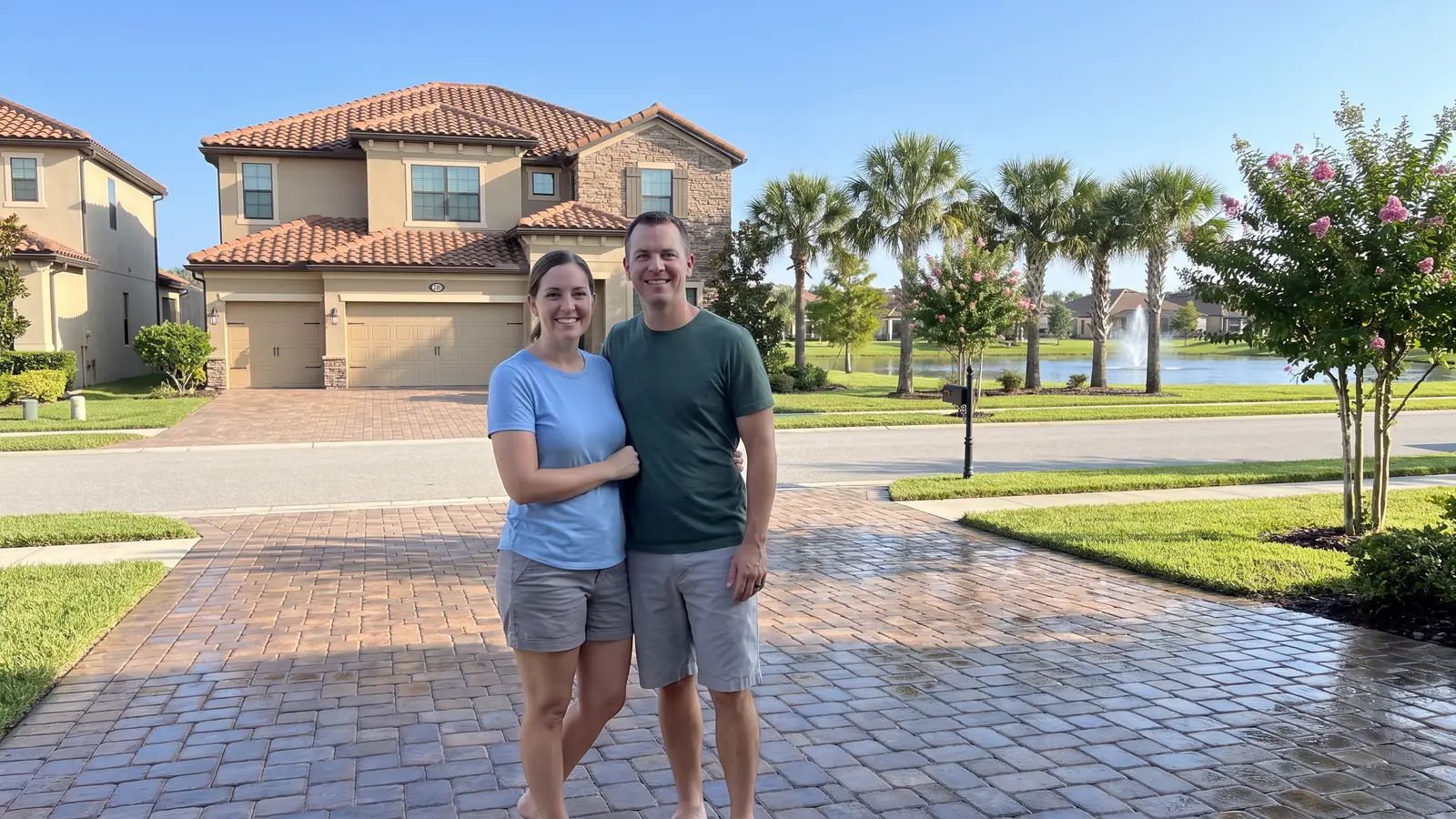
Paver sealing for St. Cloud homes
Paver Sealing in St. Cloud, FL
St. Cloud driveways, from Massachusetts Avenue to the newest streets, get a free sealing estimate when you call (321) 766-8895.
- Brings out deeper paver color
- Fresh joint sand helps lock pavers in place
- Gives weeds less room to grow
- Makes the surface easier to keep clean
- Free estimate, no obligation
Request a Free Estimate
Free, no obligation.
Fast, careful paver sealing in St. Cloud
Paver sealing is available in St. Cloud, from the older blocks near Massachusetts Avenue to the newer streets off Canoe Creek Road. A local contractor washes, re-sands and seals drives, walks and pool decks across the city, and the estimate is free. Within 1 business day, usually much sooner, you will have a reply once you ask for a free estimate.
Maybe the drive in front of your garage has gone dull from sun, with tire marks and weeds along the joints. A wash, fresh sand and a new coat can pull it back to one even color. If you want to talk it through first, call (321) 766-8895 and tell the contractor how many cars use the drive. Asking costs nothing, and you decide what comes after the estimate.
Why hire a local paver sealing contractor in St. Cloud?
St. Cloud grew from 35,183 people to 58,964 between 2010 and 2020, so pavers here range from a few years old to a few decades old. A local contractor reads that mix house by house, and you can ask for a free estimate to hear how it applies to yours.
A look at your drive and walks
A local contractor looks over your St. Cloud drive and walks at no charge and names a price before any work is agreed.
A number to compare
Companies on the Space Coast post $1.85 to $4.00 per square foot to clean, sand and seal, a fair yardstick for any St. Cloud quote.
Built for busy households
Matte hides scuffs better than a wet look, which helps where bikes, cars and kids use the drive all day.
Your call, always
Pick the date and the finish, or decide to wait. A St. Cloud estimate carries no obligation either way.
Get Your Free Estimate in St. Cloud
Tell us about your pavers in St. Cloud.
Free, no obligation
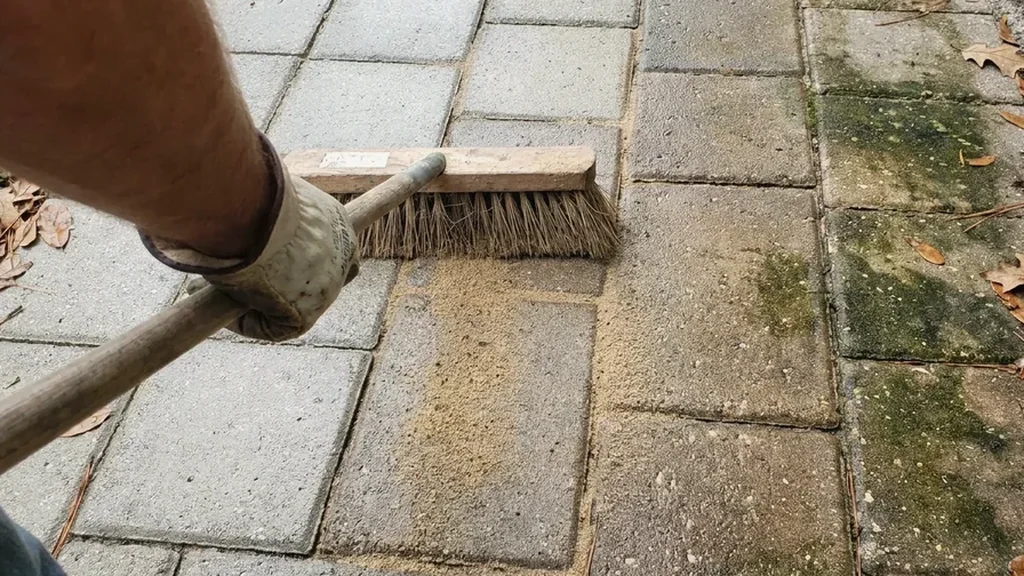
What paver problems show up most in St. Cloud?
Sprinkler runoff on the drive
Toho Water Authority says Florida law requires a working rain sensor and that heavy runoff onto neighboring property or the right-of-way can draw a citation. A sprinkler that sprays your pavers is wasting water and leaving marks. A contractor checks where the heads point, which means the cause gets fixed along with the stain. Pointing the heads away from the pavers and fixing a broken sensor protects the new coat. Overspray also feeds green growth on shaded edges, so the fix helps twice. A sensor that sticks or fails is worth fixing before the pavers are sealed. Toho Water also lists system leaks among the violations it can cite, so a leaking head is worth fixing for more than one reason.
Iron stains from well and pond water
Toho Water says wells and ponds follow the same schedule as city water, so some St. Cloud yards use them. Most Florida well water is high in iron, University of Florida extension notes, and it leaves orange deposits. Sealer over a rust mark would trap it, which means the mark is treated first. Ask the contractor to check the spray pattern at the first visit. Ask the contractor to look at where the spray lands before choosing a cleaner. Pond water is another source some yards use, and Toho Water says it follows the same rules as well water.
Tire marks from busy households
Households in St. Cloud average 3.05 people, so the drive often serves several cars, bikes and basketballs. Busy surfaces wear a coat down sooner, a Brevard company notes. A wet look shows scuffs sooner than matte, which means a family drive is often happier with matte. A short talk about how the drive is used helps the contractor pick the right finish. Bikes and scooters leave fine scuffs that a wet look shows more. Matte also hides tire marks better than a wet look, which means fewer touch-ups between coats.
Sun and shifting sand in unsealed joints
A St. Cloud company lists UV fading and weeds or grass growing in shifting sand between unsealed pavers among the problems it sees. The climate is humid subtropical with hot summers. Open joints invite roots, which means fresh sand and a sealed surface do more than make the pavers look good. Open joints also let water and dirt settle underneath, which can leave pavers uneven over time. Sun on a bare drive makes the color fade first where the cars sit. The climate is hot and humid in summer, so full sun and damp nights both take a toll on an unprotected surface.
Newer pavers that need patience
St. Cloud's population grew 67.6 percent from 2010 to 2020, and many drives are newer. A Brevard company says new pavers are generally ready for sealing 30 to 60 days after manufacture, depending on the paver and on efflorescence. A fresh drive is not ready the day the crew leaves, so the first coat waits. Sealing a young drive too soon can also lock in early efflorescence.
Where in St. Cloud can I get paver sealing, from the lakefront to Canoe Creek Road?
Anywhere in the city can, which covers 35 square miles on the south shore of East Lake Tohopekaliga. The lake is nearly 5 miles across, and Lakeshore Boulevard runs along its edge. Tell the contractor your street and the nearest cross street when you ask for a free estimate. That helps the contractor plan the route and the wash.
Downtown follows a grid. Pennsylvania Avenue leads north from US 192, City Hall sits 4 blocks up, and most historic buildings line 9th and 10th Streets. Many north-south streets are named for the states Union veterans came from, and Massachusetts Avenue holds the GAR Memorial Hall. Homes from the 1920s boom stand close by, so call (321) 766-8895 and say how old your pavers are.
Newer streets reach toward the county roads, including Canoe Creek Road (523), Hickory Tree Road (534), Nova Road (532) and Kissimmee Park Road (525). The city had 35,183 people in 2010 and 58,964 in 2020, with 21,347 housing units. Many drives there are young, so ask for a free estimate and mention when the pavers went in. Harmony and Narcoossee are unincorporated communities nearby, so mention whether your address is inside city limits.
Households in St. Cloud average 3.05 people, and more people at home can mean more cars on the drive. Toho Water Authority says Florida law requires a working rain sensor on sprinklers, and runoff onto the right-of-way can draw a citation. Mention the sprinkler zones that touch the pavers. Fix any sprinkler that sprays your pavers before you ask for a free estimate.
What does paver sealing cost in St. Cloud?
Price moves with area, access and cleaning needs. Space Coast companies commonly post $1.85 to $4.00 per square foot to wash, re-sand and seal, so a large family drive and a small entry walk end far apart. For a figure on the pavers at your home, ask for a free estimate, and the estimate is free.
Prep moves the price more than most owners expect. A St. Cloud company notes that many firms skip the cleaning step, and that step is where time and cost go. Rust marks, old coats and weeds add work, and pool decks need a sealer made for chemicals and slip resistance. Call (321) 766-8895 and the contractor can say which apply before anyone starts.
| Paved area | Typical example | Clean, sand and seal |
|---|---|---|
| 300 sq ft | Small patio or walkway | $555 to $1,200 |
| 600 sq ft | Two car driveway | $1,110 to $2,400 |
| 1,000 sq ft | Large driveway or pool deck | $1,850 to $4,000 |
| 1,500 sq ft | Driveway plus pool deck | $2,775 to $6,000 |
Math based on the $1.85 to $4.00 per square foot that Space Coast paver companies publish. Your contractor sets the actual price after seeing the surface. Repairs, leveling and stripping failed sealer are usually extra.
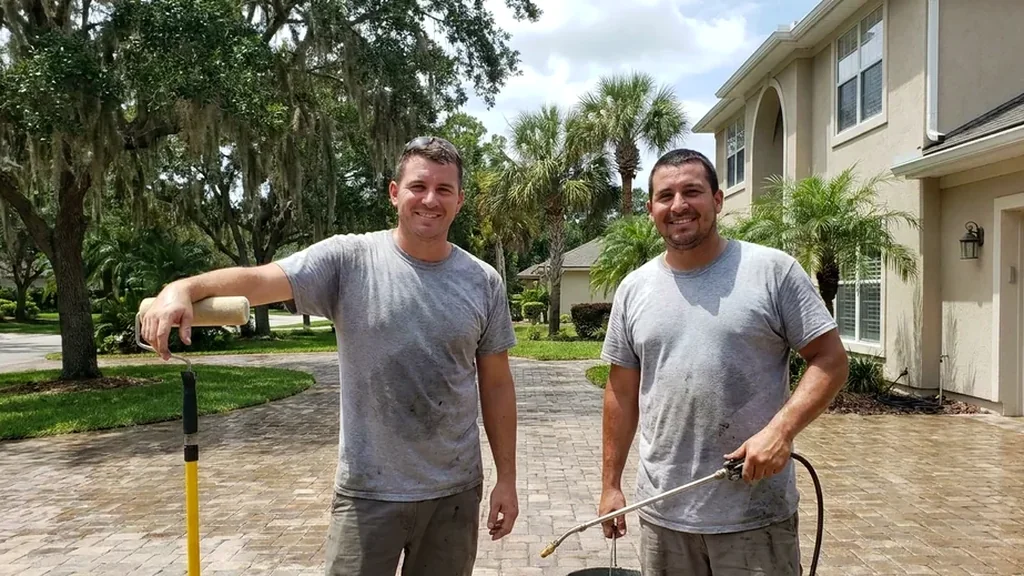
How does a paver sealing job work in St. Cloud?
Look at the drive and the sprinklers
The contractor walks your St. Cloud drive and watches where the sprinklers spray. Low or lifted pavers get noted for repair, since sealing preserves a dip. An existing coat matters too, because a solvent-based layer will not accept a water-based one on top. New pavers get a note about the date the sand went in. Tell the contractor about any rust streaks or oil spots you already know about. Photos of the garage apron and the street edge help the contractor plan. Ask the contractor to note the rain sensor and the spray pattern while on site. A walk around the garage apron, the front walk and any pool deck gives the contractor the full surface list.
Clean the surface fully
Washing removes dirt, tire marks, green growth and weeds. A St. Cloud company says many firms skip cleaning, and that is a reason bonds fail. Rust marks are treated separately in this step. Pressure stays modest, because high pressure can blow sand out of the joints. Tire marks and oil near the garage door get a stronger treatment than the rest of the drive. A soft brush handles the corners where a mower never reaches. Algae and mildew are treated so the sealer meets a clean face.
Refill the joints
After the wash, new sand fills the joints. Full joints hold the pavers in place and give weeds nowhere to root. New pavers wait until the installer says the sand has cured. The extra sand is swept away, and sand height gets a last check along the edges.
Confirm the surface is dry and not too hot
Sealer needs a completely dry surface that is not too hot. One Brevard-area company puts the hot limit near 90 degrees, and a St. Cloud summer afternoon can pass that mark. The contractor may start early, and a hand on the pavers beats a glance at the sky. If rain looks likely, the job waits, and after a rain the low corners get a second look.
Seal and set the stay-off time
The sealer goes on in the finish you chose, and a company here describes a sprayed flood coat then a final coat. A Brevard company lists about an hour to rain ready and 48 hours to full cure, then asks owners to hold off driving for 72 hours. A new coat is commonly quoted at two to five years out. Ask for care notes, and plan guests and deliveries around the cure window. The first coat sets the look, and a second coat, where used, goes on after the first dries.
Complete paver services in St. Cloud
On a St. Cloud lot the sequence is wash, stain treatment, joint sand, drying and sealing, in that order. Skipping ahead leaves dirt under the coat where it stays in view. Application usually takes a couple of days. To ask how long each stage would take on your lot, call (321) 766-8895.
Driveways carry the cars, walkways take the daily trips to the door, and pool decks need slip resistance and chemical-rated sealer. Each surface wears differently, and a family drive shows wear soonest. Tell the contractor which surfaces you have when you ask for a free estimate, and the plan can match them.
Start with what is on the pavers now, since a solvent-based coat cannot take a water-based one over it. Then pick the look. A St. Cloud company says matte usually lasts longer than glossy, and a wet look deepens color. Ask which product your contractor plans to use, then call (321) 766-8895 to talk it over.
Timing in St. Cloud depends on heat, rain and sprinkler schedules. Sealer needs a dry surface, and a hot afternoon can spoil a coat. A contractor may ask you to adjust the sprinklers for a few days. To find a window that fits your week, ask for a free estimate.
Questions to ask before you hire
- How long until cars can drive on the driveway and people can walk on the patio?
- What happens if an afternoon storm rolls in the day you planned to seal?
- Do you add a slip-resistant additive when you seal a pool deck?
- Is the quote priced per square foot, and what does that add up to for my driveway?
- Do you fix sunken or loose pavers before sealing, and is that priced separately?
- Who will be the contractor on my job, and can I see proof of insurance before work starts?
- Does my HOA need to approve the sealer or the finish before you begin?
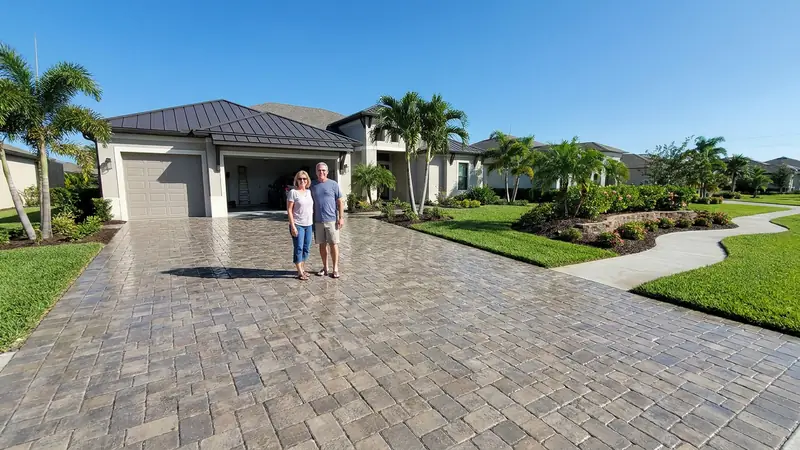
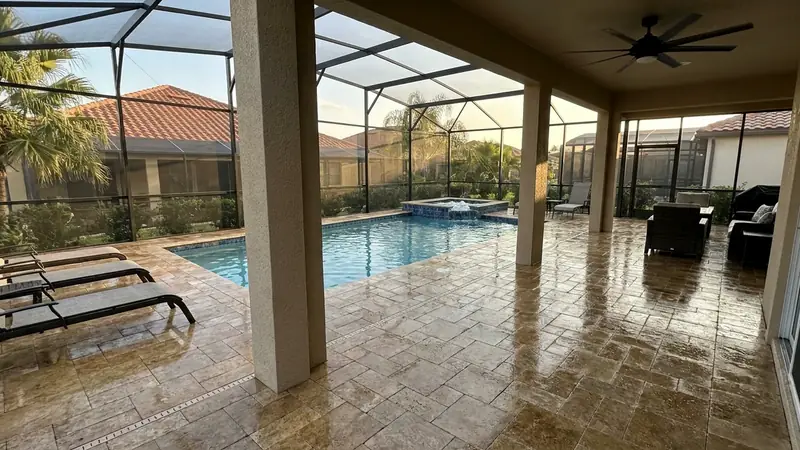
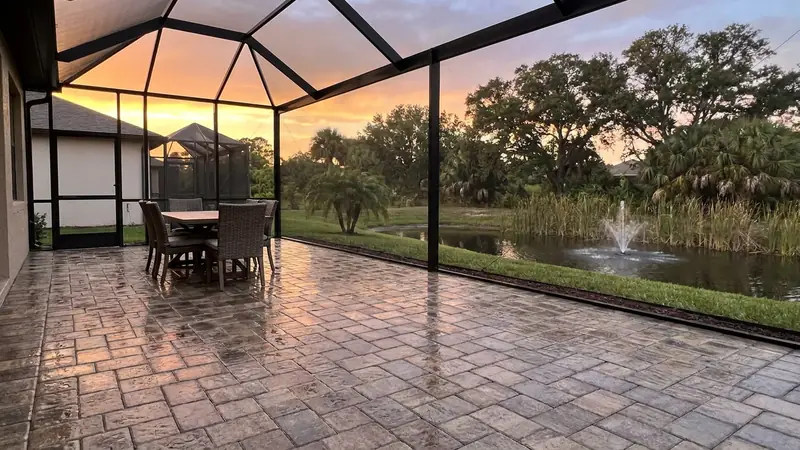
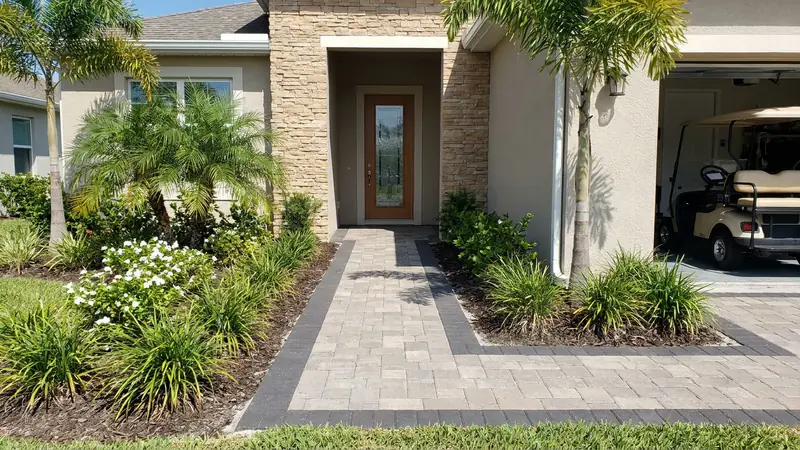
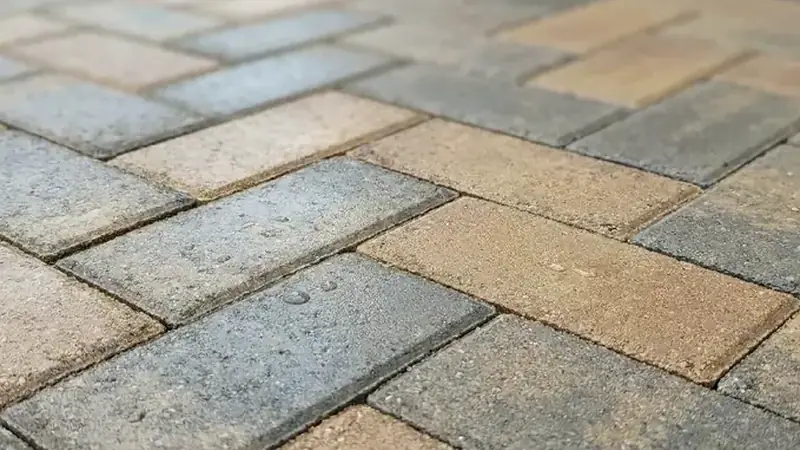
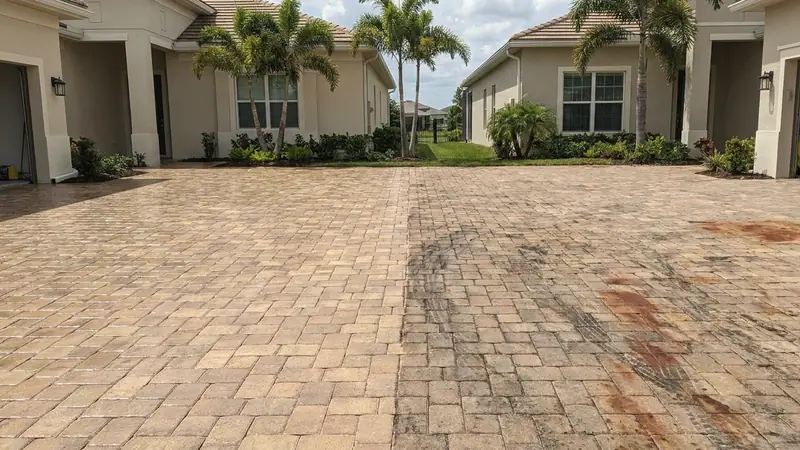
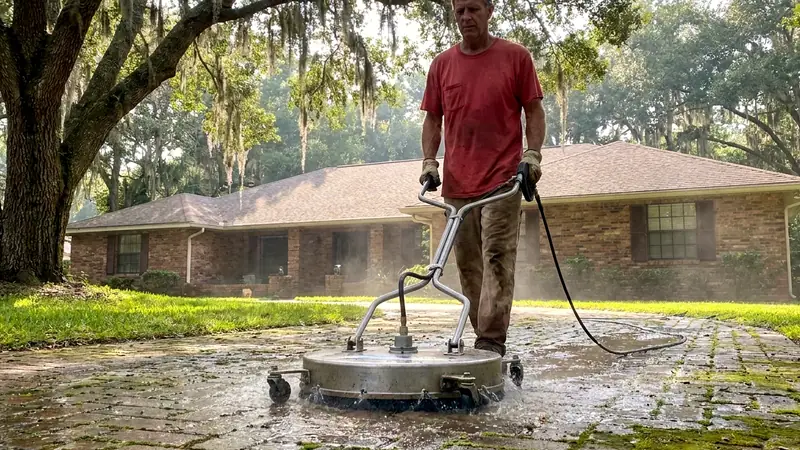
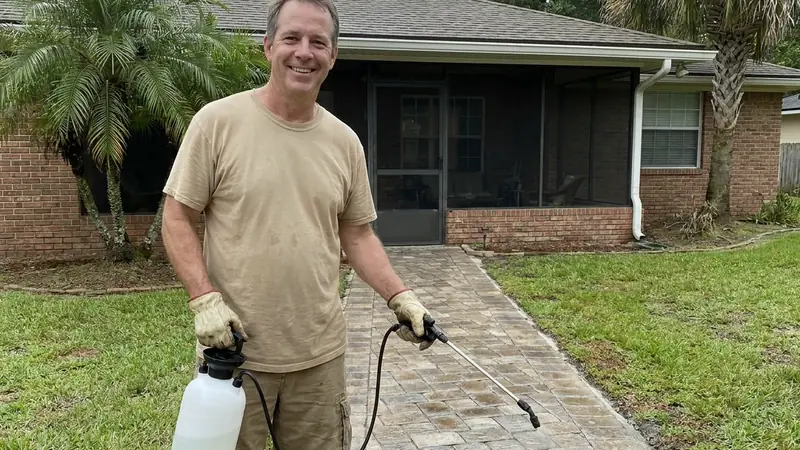
What do sealed pavers look like around St. Cloud?
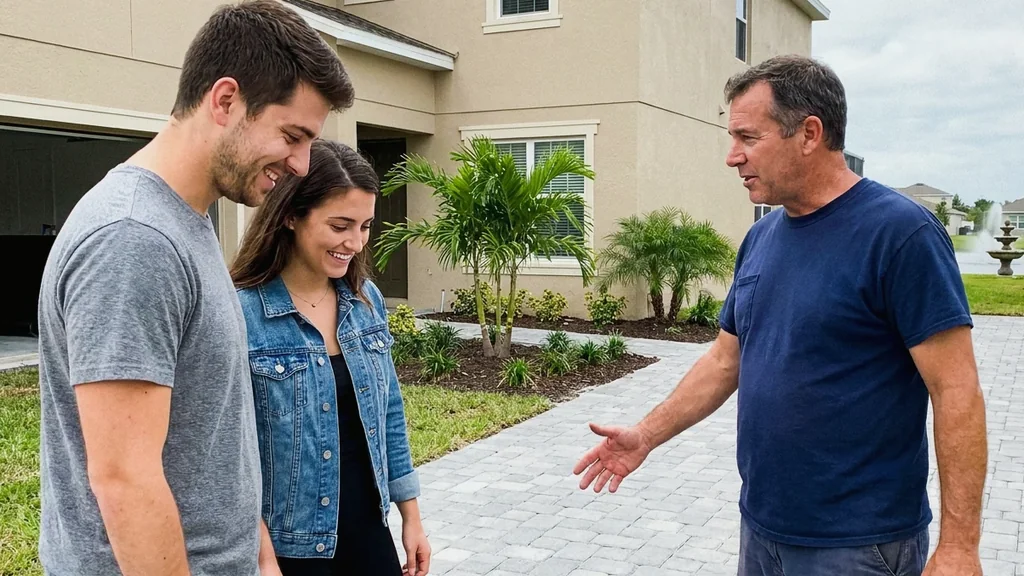
Why local matters in St. Cloud
A contractor who knows St. Cloud will ask about your sprinklers before anything else. Overspray and iron-rich well water are common causes of stains on drives, and sealing over a stain traps it. Someone new to the area may skip that question. To reach a contractor who works around Osceola County, call (321) 766-8895.
Local knowledge also covers age. Downtown has 1920s homes and newer streets stretch toward Canoe Creek Road, so pavers range from worn to brand new. A local contractor asks when the drive went in before choosing a plan. You can ask for a free estimate and share what you know.
Households here are busy, with an average of 3.05 people per home. That means more cars, more bikes and more scuffs on the finish. A local contractor talks about matte versus wet look with that in mind. If your drive is the family's main yard, ask for a free estimate and ask how the finish will hold up, with no obligation to hire anyone.
Why is St. Cloud's downtown a good guide to the city's older streets?
Downtown holds the city's oldest public buildings. The GAR Memorial Hall at 1101 Massachusetts Avenue was built in 1914, and the Veterans Memorial Library next to the Heritage Museum went up in 1922, designed by Ida Annah Ryan and Isabel Roberts. The library building joined the National Register in 2020. If your home is near Massachusetts Avenue, ask for a free estimate.
Outside downtown, Lakefront Park at 1104 Lakeshore Boulevard offers a beach, a playground and picnic areas on East Lake Tohopekaliga. Peghorn Nature Park at 2101 Peghorn Way has trails and a fishing lake. Ancient oaks and restored 1920s homes line many older blocks. Near any of these St. Cloud landmarks, call (321) 766-8895 and name your street.
Growth tells the other half of the story. The city counted 20,074 people in 2000, 35,183 in 2010 and 58,964 in 2020. Newer streets near Canoe Creek Road and Nova Road carry young pavers, so ask for a free estimate and ask about a first coat.
More places anchor the map. The St. Cloud Farmer's Market meets at 11th Street and New York Avenue, and The Catfish Place opened on 13th Street in 1973. Harmony Golf Preserve at 7251 Five Oaks Drive winds around wetlands and lakes. If your home sits near any of them, call (321) 766-8895 and describe your pavers.
East Lake Tohopekaliga covers 11,968 acres and is about 18 feet deep at most, with Boggy Creek as its main inflow. The city sits on the south shore, about 5 miles east of Kissimmee on US 192. Summers are hot and humid, so ask the crew how it handles drying times. Ask which hours of the day it prefers when you call (321) 766-8895.
Saint Cloud High School stands in the city, and the city sits at 69 feet of elevation. Ask how rust gets treated before sealing. Orange streaks from iron-rich well water can mark pavers, so call (321) 766-8895 and say how your yard is watered.
Frequently Asked Questions
How much does it cost to seal pavers in St. Cloud?
Space Coast companies publish $1.85 to $4.00 per square foot for the clean, sand and seal, so plan around that. On a St. Cloud lot the total follows the size of the area, the access and the cleaning needed. Have the quote show total area, then test the price per foot against that range. A big drive plus a pool deck costs more in total, even at the same rate. Rust, old coats and weeds can lift the total.
How often should St. Cloud pavers get a fresh coat?
Quotes from companies range from two to five years between coats, and one St. Cloud company says about every three. A busy family drive or a sunny exposure argues for the short end. A coat is spent once water sinks in at once rather than beading. Check sooner if the drive faces afternoon sun all day.
What are the downsides of sealing pavers in St. Cloud?
The trade-offs are the repeat cost and the weather window. A coat wears out in a few years, a wet look shows scuffs sooner than matte, and sealing cannot lift a sunken section. A free estimate lets you weigh those points against the cleaner, steadier look.
Can a St. Cloud homeowner seal pavers without hiring a contractor?
Sealing comes down to cleaning, drying and timing, and a rushed coat can trap dirt or rust beneath it. A St. Cloud company notes that many firms skip cleaning, and the result suffers. A contractor takes care of those steps, and the visit to look at your drive is free. You can still ask the contractor how each stage works, so you know what to expect.
Is it better to spray or roll sealer on St. Cloud pavers?
Many companies spray sealer, and one Brevard company describes a sprayed flood coat followed by a final coat. How the sealer is applied matters less than clean, dry pavers and full joints. Ask your contractor which method suits your surface. Either way, ask the contractor how the joints and edges are covered.
Can sprinklers damage pavers in St. Cloud?
They can leave stains. Wells and ponds follow the same schedule as city water, and well water in Florida is often high in iron, which leaves orange marks. A contractor checks where the heads point before sealing. Fixing a spray pattern costs little and prevents new marks. A rain sensor that works also keeps sprinklers from running after a storm.
Which finish suits a busy St. Cloud driveway, matte or wet look?
Matte is the usual pick for a busy drive, since a wet look shows scuffs sooner. A St. Cloud company says matte usually lasts longer than glossy. A wet look deepens color, so some owners choose it for a front walk. Ask for a small sample patch if you cannot decide.
How long should I stay off pavers after sealing in St. Cloud?
Plan on about an hour before rain is a worry and two days before the coat is fully cured, according to a Brevard company. Cars come back at 72 hours. Confirm the exact wait with your contractor, and keep bikes and pets off until then.
What happens if St. Cloud pavers are never sealed?
A St. Cloud company lists UV fading, stains and weeds in shifting sand between unsealed pavers. Pavers can still last for years. Sealing slows those problems, which is why many owners choose it. A short wash and re-sand can also help an older, unsealed drive. Ask what your pavers look like today before you decide.
Nearby areas we serve
Ready for a Free Estimate in St. Cloud?
Call (321) 766-8895 and tell us about your pavers.
Free, no obligation