
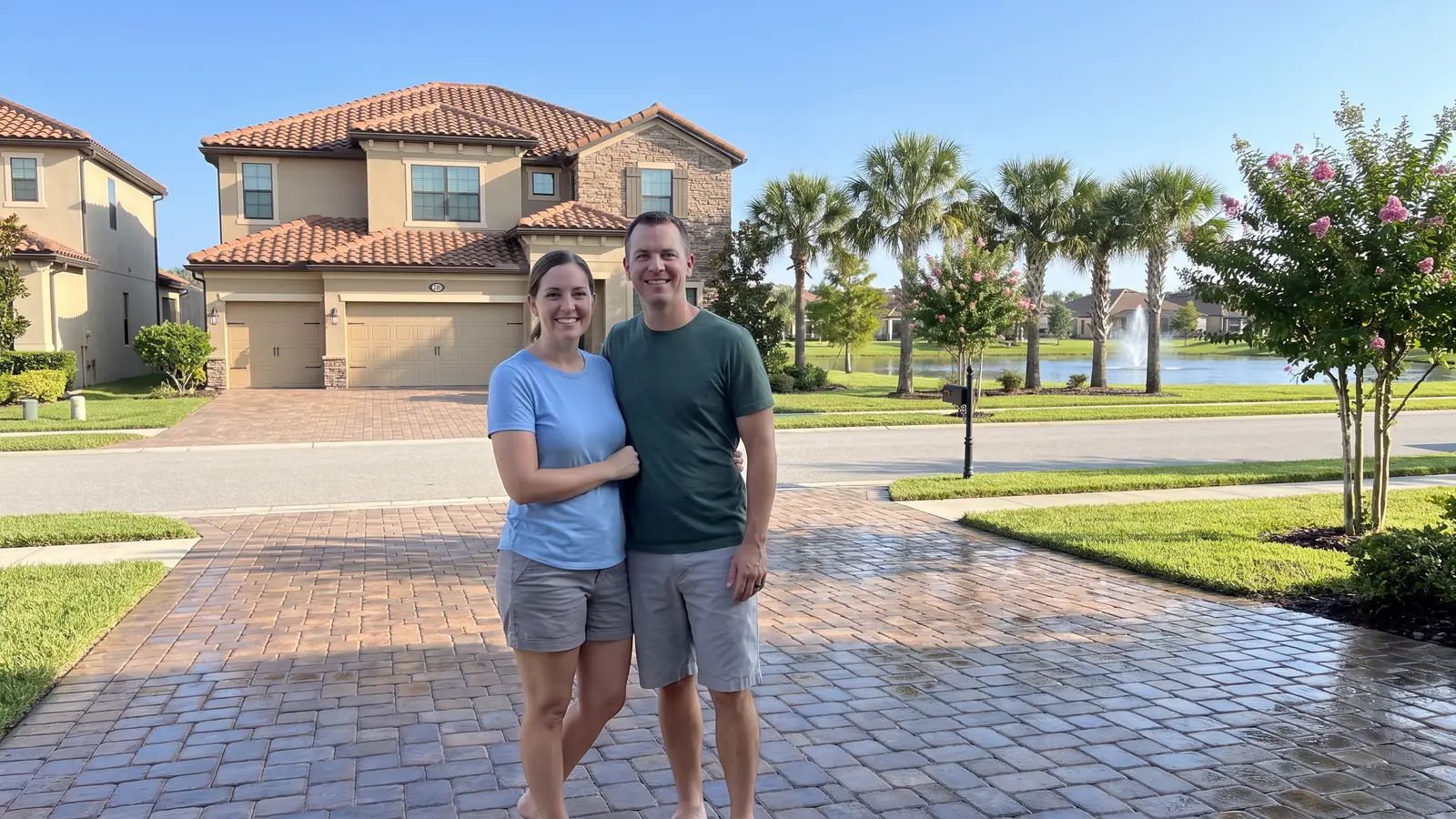
Paver sealing for Downtown Melbourne homes
Paver Sealing in Downtown Melbourne, FL
Downtown Melbourne's New Haven Avenue blocks mix 1920s streets with new townhomes, so call (321) 766-8895 for a free sealing estimate.
- Brings out deeper paver color
- Fresh joint sand helps lock pavers in place
- Gives weeds less room to grow
- Makes the surface easier to keep clean
- Free estimate, no obligation
Request a Free Estimate
Free, no obligation.
Fast, careful paver sealing in Downtown Melbourne
Paver sealing is open to homes across Downtown Melbourne, from older cottages near New Haven Avenue to townhomes near the water. A local contractor cleans, re-sands and seals walkways, patios, driveways and pool decks, and the estimate is free. If you call (321) 766-8895, you will hear back within 1 business day, usually much sooner.
Think of the front walk you cross every day. The color has dulled, a green stripe runs along the edge, and the joints have gone thin. A contractor can wash it, refill the sand and seal it, so it reads as one clean surface again. For a written price first, ask for a free estimate.
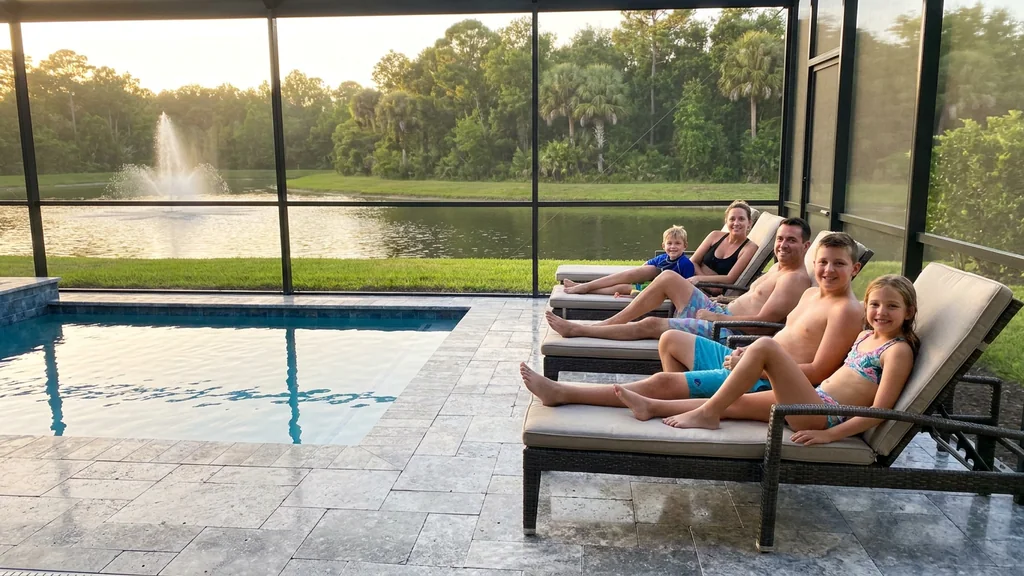
Why hire a local paver sealing contractor in Downtown Melbourne?
Downtown Melbourne has 1920s streets, newer townhomes and a lagoon that most of the city drains toward. A local contractor plans around all three, and you can call (321) 766-8895 to hear how.
A free walk-through
A contractor stops by to see your walkway, patio or drive, and the visit is free. You get a price in hand before you agree to a date.
A range you can check
County companies list $1.85 to $4.00 a square foot to wash, re-sand and seal. Compare any quote to that range.
Plans for small spaces
A stoop, a courtyard or a narrow side walk gets measured by itself, so you pay for the surface you have.
Your finish, your date
Pick matte or wet look and the day that works. A Downtown Melbourne estimate carries no obligation.
Get Your Free Estimate in Downtown Melbourne
Tell us about your pavers in Downtown Melbourne.
Free, no obligation
What paver problems show up most in Downtown Melbourne?
Runoff on its way to the lagoon
About 80 percent of Melbourne's land drains toward the Indian River Lagoon, and Crane Creek reaches the river near Front Street. Rain that crosses pavers on its way downhill carries silt and sand with it. That leaves a gray film in the low spots and thins the joints at the edges. The film has to be washed off before any coat goes on, or the sealer locks it in. Look at the corners where your walk meets the street or a downspout, since that is where the film usually starts.
Many ages on a single block
In ZIP 32901 the Census counts about 480 homes from before 1950, 1,638 from the 1950s and 3,761 built since 2000. Early houses here were often frame vernacular, and the 1920s Land Boom built out New Haven Avenue. Pavers on those lots may have been laid in a dozen different decades. Each one could carry a different old coat, and water-based sealer cannot go over solvent-based sealer. If you know who sealed your pavers last, or what they used, mention it at the first visit. It saves a test patch and a day.
Afternoon storms on thin joints
Melbourne averages 51 inches of rain a year, much of it in thunderstorms from late May to early October. Near the city about 14 days a year bring an inch or more. A downpour that hard can pull sand from joints that are already low. Where the joints stay open, soil moves in and weeds soon follow. Fresh sand goes back in before sealing, since a coat over thin joints leaves them open for the next storm.
Damp edges near water and shade
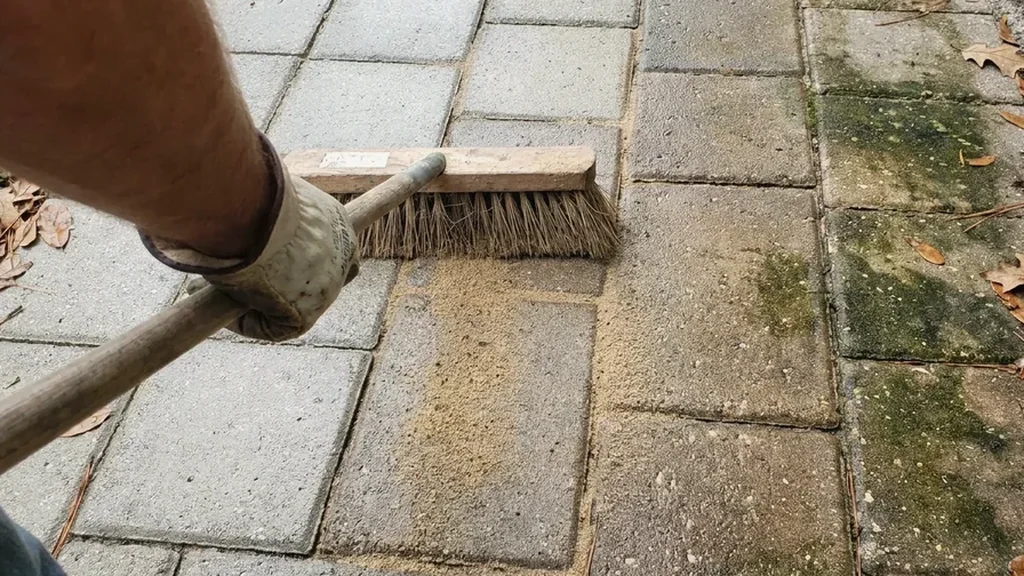
Moss, lichens and algae should not grow on pavers unless the area is heavily shaded, says Landscape Ontario's paver guidance. Walkways close to a creek, a building wall or a hedge fit that picture. Green film appears where the surface stays damp longest, and it makes pavers slick. It has to be removed completely before sealing. A coat laid over the film locks it in, and the surface stays slick underneath.
Heavy use at entries and courtyards
About 4,053 of the 13,365 homes in ZIP 32901 are in buildings of five or more units. Shared entries, stairs and pool areas take far more steps than a single driveway. The wear shows up as bright patches at doors and dull stretches along the edges. A fair estimate measures each shared area on its own. If you sit on a board or manage a building, ask for each area to be priced separately.
Does a Downtown Melbourne townhome need a different sealing plan than a cottage?
Often it does, because the surfaces differ even when the pavers look alike. In ZIP 32901 the Census counts 6,674 detached homes, 473 attached ones and about 4,053 units in larger buildings. A cottage may have a front walk and a drive, while a townhome has a patio and a stoop. Say which one is yours when you ask for a free estimate.
Older streets near New Haven Avenue grew after the 1919 fire wiped out Front Street's shops. The new district rose during the 1920s Land Boom, and the Henegar Center, built in 1919 as a school, still stands on East New Haven. Houses from that era sit beside newer builds, so pavers can vary a lot from one lot to the next. Call (321) 766-8895 and mention about when your cottage or townhome was built.
Newer homes are common too, with 2,211 built from 2000 to 2009 and 1,243 from 2010 to 2019 in ZIP 32901. Newer pavers may need only a wash and a fresh coat, while older ones may need an old coat removed first. The contractor can tell after a short look at the surface and the joints. To get that look scheduled, ask for a free estimate.
Renters are a big part of the picture. In ZIP 32901, 5,839 of 11,550 occupied homes are renter-occupied and 5,711 are owner-occupied, so sealing is often a decision for a landlord or property manager as well as for a homeowner. If you manage several units, ask the estimator to price each walk, stoop and courtyard separately when you ask for a free estimate.
Walks that cross a front yard are often the first surface people want done, because guests see them. A stoop and a walk can be washed, re-sanded and sealed in a short visit, while a courtyard shared by several doors may take longer. Tell the estimator who uses each area and when, and call (321) 766-8895 to set a quiet hour.
In the early 1900s Melbourne houses were often built in the frame vernacular style, and ZIP 32901 counts 481 homes built before 1950. The median build year there is 1984, and 2,570 homes went up from 1980 to 1989. So pavers here range from decades old to fairly new, and each age needs a different look. To describe yours, ask for a free estimate.
What does paver sealing cost in Downtown Melbourne?
Brevard County's published range is $1.85 to $4.00 per square foot for the whole wash, sand and seal. Where a Downtown Melbourne quote sits inside that range comes down to square footage, wear and the amount of cleaning. Green film, rust and old sealer add steps. To get a price for your own surface, call (321) 766-8895.
Small spaces have their own math. A stoop and a short walk cost little in total, while a courtyard with a pool deck costs more at the same rate. Narrow side yards where gear has to be carried by hand can take longer. For a written price on each surface, ask for a free estimate.
The Brevard company that publishes its steps lists two coats, so ask any bidder whether the price covers one coat or two. The quote should also say whether a stain treatment is in it. A bid that skips the rinse after the efflorescence step may be cheaper on paper for a reason. To compare real steps, ask for a free estimate.
| Paved area | Typical example | Clean, sand and seal |
|---|---|---|
| 300 sq ft | Small patio or walkway | $555 to $1,200 |
| 600 sq ft | Two car driveway | $1,110 to $2,400 |
| 1,000 sq ft | Large driveway or pool deck | $1,850 to $4,000 |
| 1,500 sq ft | Driveway plus pool deck | $2,775 to $6,000 |
Math based on the $1.85 to $4.00 per square foot that Space Coast paver companies publish. Your contractor sets the actual price after seeing the surface. Repairs, leveling and stripping failed sealer are usually extra.
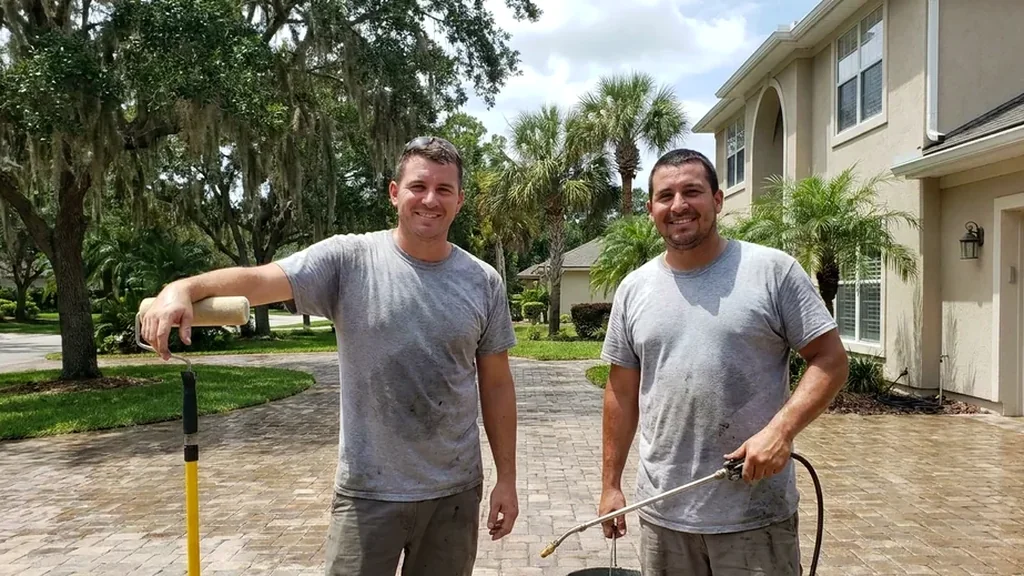
How does a paver sealing job work in Downtown Melbourne?
Check the surface and where the water goes
The contractor starts by walking the pavers and watching where rain would run. In a town that drains toward the lagoon, low corners and downspouts are the first places to hold grime. Any pavers that have sunk or lifted get flagged before sealing, since a coat only preserves a dip. A past coat matters too, so the contractor asks what was used and when. You will also learn how long the work should take and when the surface can be used again.
Pretreat and wash
A Brevard company's published job opens with a pretreatment and a surface clean and rinse. On Downtown Melbourne walks that means lifting the green film, dust and silt that runoff leaves behind. Plants, doors and parked cars are shielded from the rinse, which matters on tight lots. Loose pavers are noted for repair before the next step.
Treat stains and rinse again
Rust, white haze and other marks get a targeted treatment, followed by a second rinse. The published job puts an efflorescence treatment at this point. Clearing these now stops them from showing through the new coat. Landscape Ontario says efflorescence is a white deposit on cement products that fades with weathering, so it can look worse than it is.
Sand the joints and wait for dry weather
Washing pulls sand from the joints, so the contractor fills them and sweeps the surface. Sealer needs a dry surface. In a place with 138 days of wet season, the day may move when the forecast turns. Joints hold moisture longer than the paver tops, so a careful contractor checks both before starting.
Seal in two coats and set the keep-off time
The published job calls for two thin coats, and a Melbourne company says thin coats avoid puddling. A Brevard County firm lists 45 minutes to an hour before rain is harmless and 72 hours before cars. Ask what applies to your sealer, and plan where to park until then. A note to neighbors helps on a shared drive.
Complete paver services in Downtown Melbourne
A Downtown Melbourne job has three decisions: what is on the pavers now, what needs fixing, and which finish you want. After that the work runs in order, with a wash, fresh sand and sealer last. That order keeps dirt from getting trapped under the coat. To ask how it would run at your address, call (321) 766-8895.
Surfaces here include front walks, stoops, courtyards, driveways and pool decks. A walk near a wall stays damp, a drive takes tires, and a pool deck takes chlorine and bare feet. Each wears differently, so each gets its own plan. Tell the contractor which ones you have when you ask for a free estimate.
Sealer comes in film-forming and penetrating types. A Melbourne company says film-forming sealers give about two to three years, and penetrating ones up to five. Matte or wet look is the next choice, and wet look shows scuffs sooner. Call (321) 766-8895 to talk through a pick that suits your pavers.
Timing follows the sky, with a hot wet season from late May to October and a warm dry season from November to April. One Brevard company calls September through May the easier stretch for sealing, though jobs happen all year. A shaded walk may need extra drying time. For a day that suits your block, ask for a free estimate.
Questions to ask before you hire
- Is the old sealer on my pavers failing, and would it have to be stripped first?
- Who will be the contractor on my job, and can I see proof of insurance before work starts?
- What happens if an afternoon storm rolls in the day you planned to seal?
- Do you pressure wash the pavers and refill the joint sand before any sealer goes on?
- Do you add a slip-resistant additive when you seal a pool deck?
- Is the quote priced per square foot, and what does that add up to for my driveway?
- How do you keep sealer off my lawn, my plants and the edge of the pool?
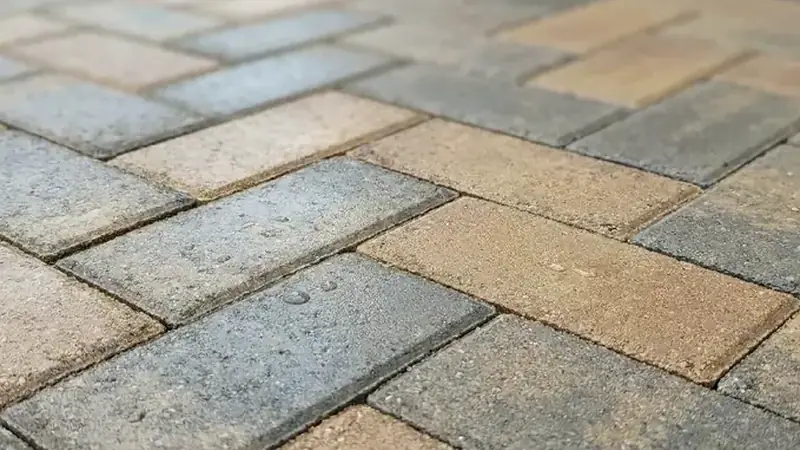
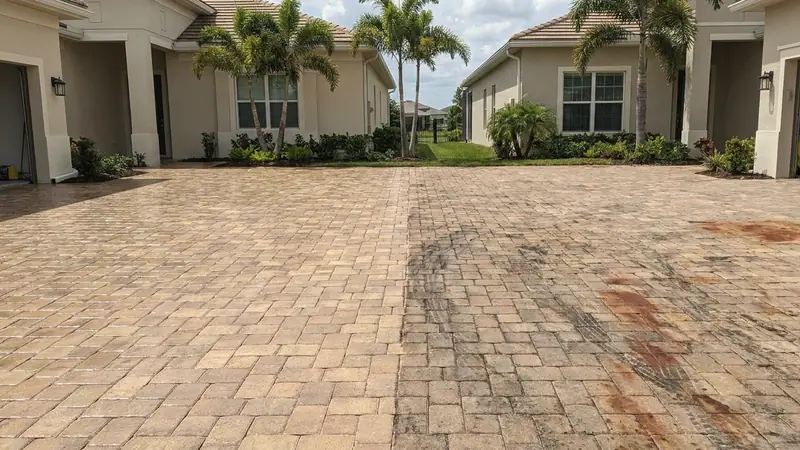
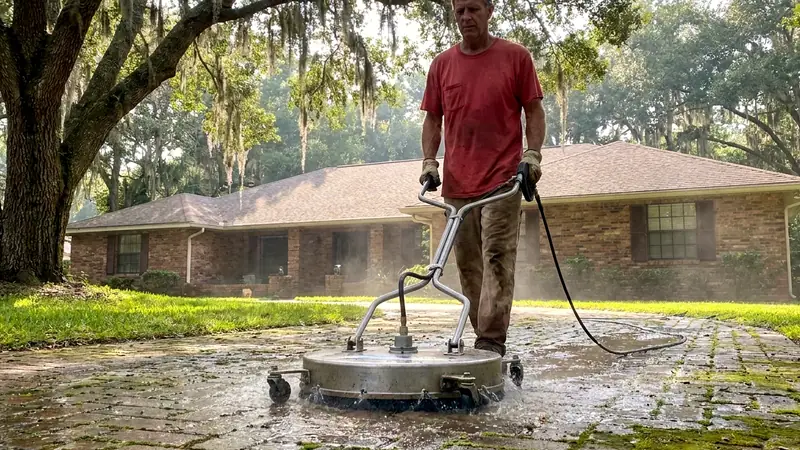
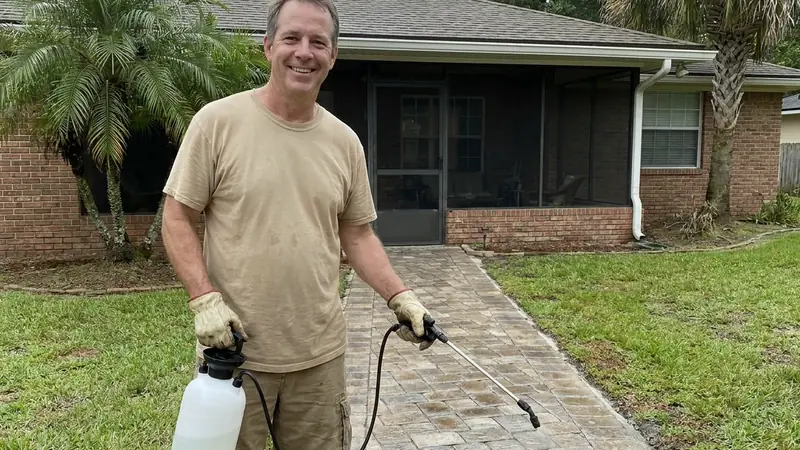
What do sealed pavers look like around Downtown Melbourne?
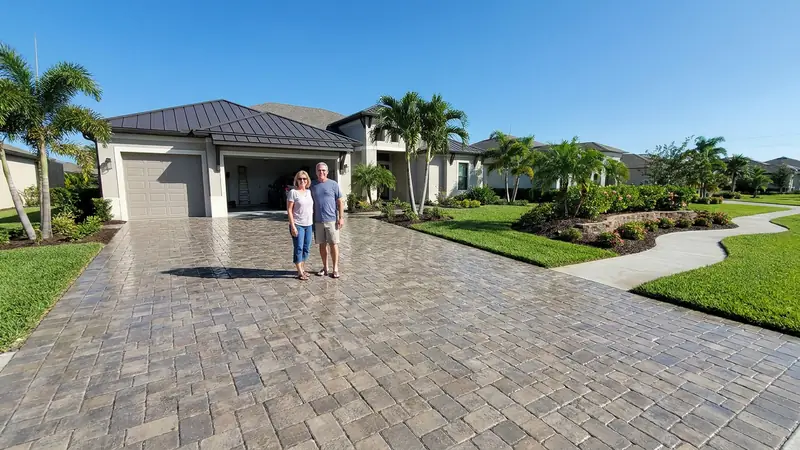
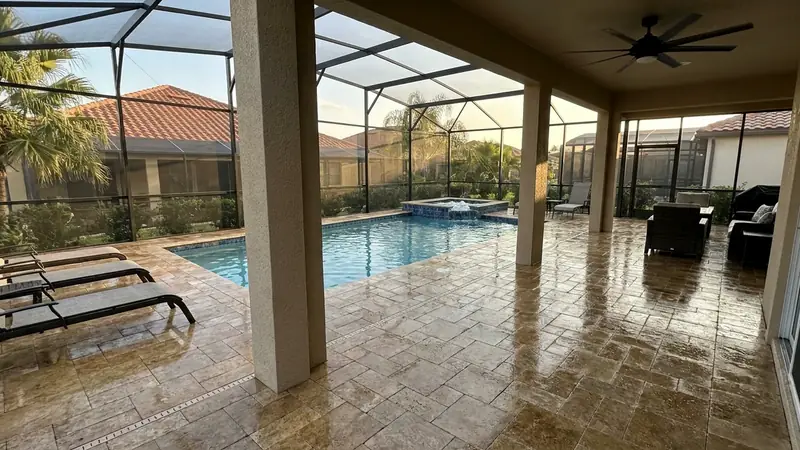
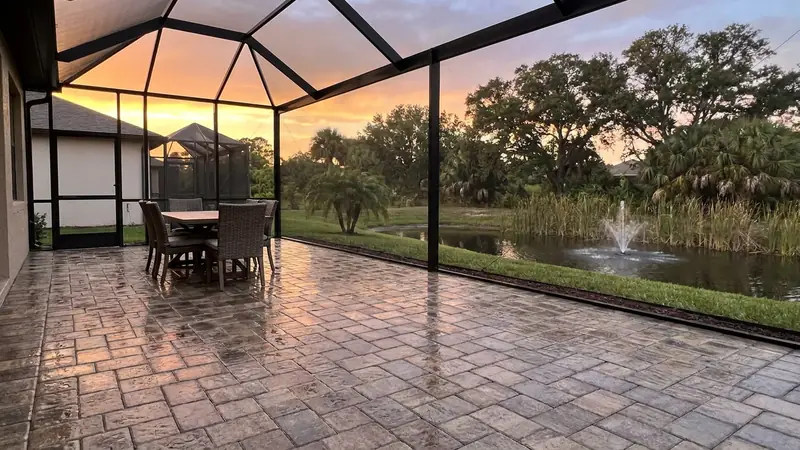
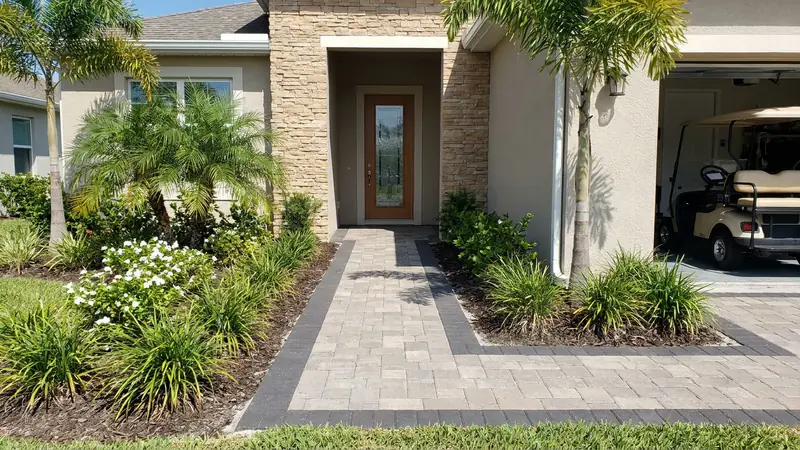
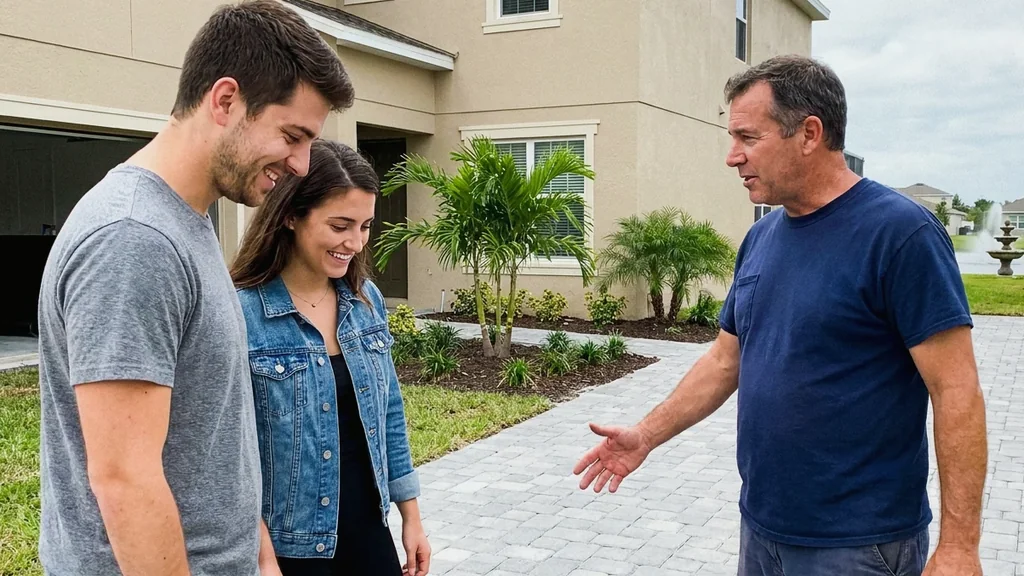
Why local matters in Downtown Melbourne
A contractor who works Downtown Melbourne knows the blocks near New Haven Avenue, where cottages sit beside newer builds. That mix changes how much work comes before the sealer. A crew from outside the area may not ask about the age of your house. Call (321) 766-8895 to reach a contractor who already knows the blocks near New Haven Avenue.
Local knowledge also covers water. Most of the city drains toward the Indian River Lagoon, and Crane Creek runs out near Front Street. A crew that knows this checks the low corners first. You can ask for a free estimate and ask how the visit would handle drainage on your lot.
Parking and access matter downtown as well. Narrow side walks, shared courtyards and tight driveways need planning, and neighbors need notice. A local contractor plans the day around those limits. Call (321) 766-8895 and tell the contractor how the pavers are reached from the street.
Downtown streets hold homes, shops, a marina and an arts center within a few blocks, so parked cars and deliveries shape the day. A local contractor plans trucks, hoses and a drying window around them, and tells neighbors ahead of time. Say where a crew can park when you ask for a free estimate.
One Brevard company's published job for Melbourne lists seven steps, from pretreatment to the second coat. A local crew knows which of those steps your lot needs, and tells you before the day starts. Ask for the list in writing, and call (321) 766-8895 to hear how your block would go.
What should you know about Downtown Melbourne's streets before you hire?
Downtown Melbourne grew around the 1893 railroad, the Indian River Lagoon and the port at Crane Creek. The town took its name from Cornthwaite John Hector, its first postmaster, who had lived in Melbourne, Australia. A fire in 1919 destroyed Front Street, and a new district rose on New Haven Avenue in the 1920s. If you live near those streets, ask for a free estimate.
The 1950s brought a shopping center on Babcock Street that drew customers away, and downtown recovered by the 1980s. Today Front Street and New Haven hold parks, the Melbourne Harbor Marina, murals and shops. The Henegar Center dates to 1919, and a brewery now fills a 120 year old hardware store. If you live close to one of these, call (321) 766-8895.
Cornthwaite John Hector, for whom the city was named, was also a storekeeper on Crane Creek, a 3.3 mile stream with its mouth near Front Street. The creek is a tributary of the Indian River. Pavers in low spots near it are good candidates for a joint check, so call (321) 766-8895.
Frequently Asked Questions
How soon should Downtown Melbourne pavers be resealed?
Most Brevard County companies quote every two to three years. A walk in sun all day and a drive with daily tire traffic sit at the short end, while a shaded courtyard may run longer. Look for fading color, thin joints and green film, and book a look when you see them.
Is it better to spray or roll paver sealer?
Both, usually. Crews commonly spray the sealer and follow with a roller so it settles into the joints. A thin, even film beats a heavy one, since puddles dry cloudy. Ask who will roll your stoop and walk, and how the edges against walls and steps will be covered.
Is there a downside to sealing pavers in Downtown Melbourne?
The main downsides are upkeep and timing. Sealer wears out and needs a new coat down the road, and a wet look shows scuffs sooner than matte. It also needs a dry surface, so a stormy week can push your date. Both points are normal and neither should stop you from sealing.
Is paver sealing expensive in Downtown Melbourne?
Published rates for Brevard County come to $1.85 to $4.00 per square foot, wash and sealer included. A small walk or stoop costs little in total, and a large drive with a pool deck costs more. Ask for the square footage so you can see how the price is built. Stained or neglected pavers can land toward the high end.
What is the average cost to seal pavers in Downtown Melbourne?
There is no single average, but the published county range is $1.85 to $4.00 per square foot to clean, sand and seal. Where you land depends on area, wear and old sealer. A written estimate with your own measurements is the only reliable number. It is free, and it carries no obligation.
How long do paver sealers last by the Indian River Lagoon?
Many companies quote two to five years from one coat to the next. A Melbourne company says film-forming sealers give about two to three years and penetrating ones up to five. Sun, storms and heavy foot traffic can shorten that. A wet-look finish also shows wear sooner.
Does rain right after sealing ruin a Downtown Melbourne job?
Yes, a shower can ruin a coat that has not set. One Brevard County firm says a coat is safe from rain in 45 minutes to an hour and cures fully in 48 hours. A careful contractor watches the forecast and moves the day instead of risking it. Ask how many hours of dry weather your sealer needs.
Should I check my association's rules before sealing in Downtown Melbourne?
Yes, if your townhome or condo has a board or manager. Ask whether the finish, the sealer or the schedule needs approval. The contractor can give you the product name and finish in writing to share. Some boards also want the schedule, so ask early.
Can new sealer go over old sealer on Downtown Melbourne pavers?
Only in some cases. One rule limits the choice: a solvent-based coat on the surface rules out a water-based topcoat, so the contractor learns what is there first. A peeling, cloudy or patchy coat usually has to come off. On an older cottage, ask neighbors or former owners who did the last coat.
Do Downtown Melbourne pavers need new joint sand before sealing?
Most likely. Washing pulls sand from the joints, so Landscape Ontario advises topping up any joint left with little or none. The contractor refills them after the rinse and before any sealer goes on. Full joints help hold the pavers in place and give each coat a flat, firm edge.
What time of year suits sealing pavers in Downtown Melbourne?
Brevard companies describe September through May as the easier stretch, with lower humidity and less rain. About 64 percent of a year's rain near Melbourne falls in a 138 day wet season, and jobs still happen then when a dry day opens up. Pick a window with a few clear days in a row, and let the contractor move the date if a storm is forecast.
Ready for a Free Estimate in Downtown Melbourne?
Call (321) 766-8895 and tell us about your pavers.
Free, no obligation