
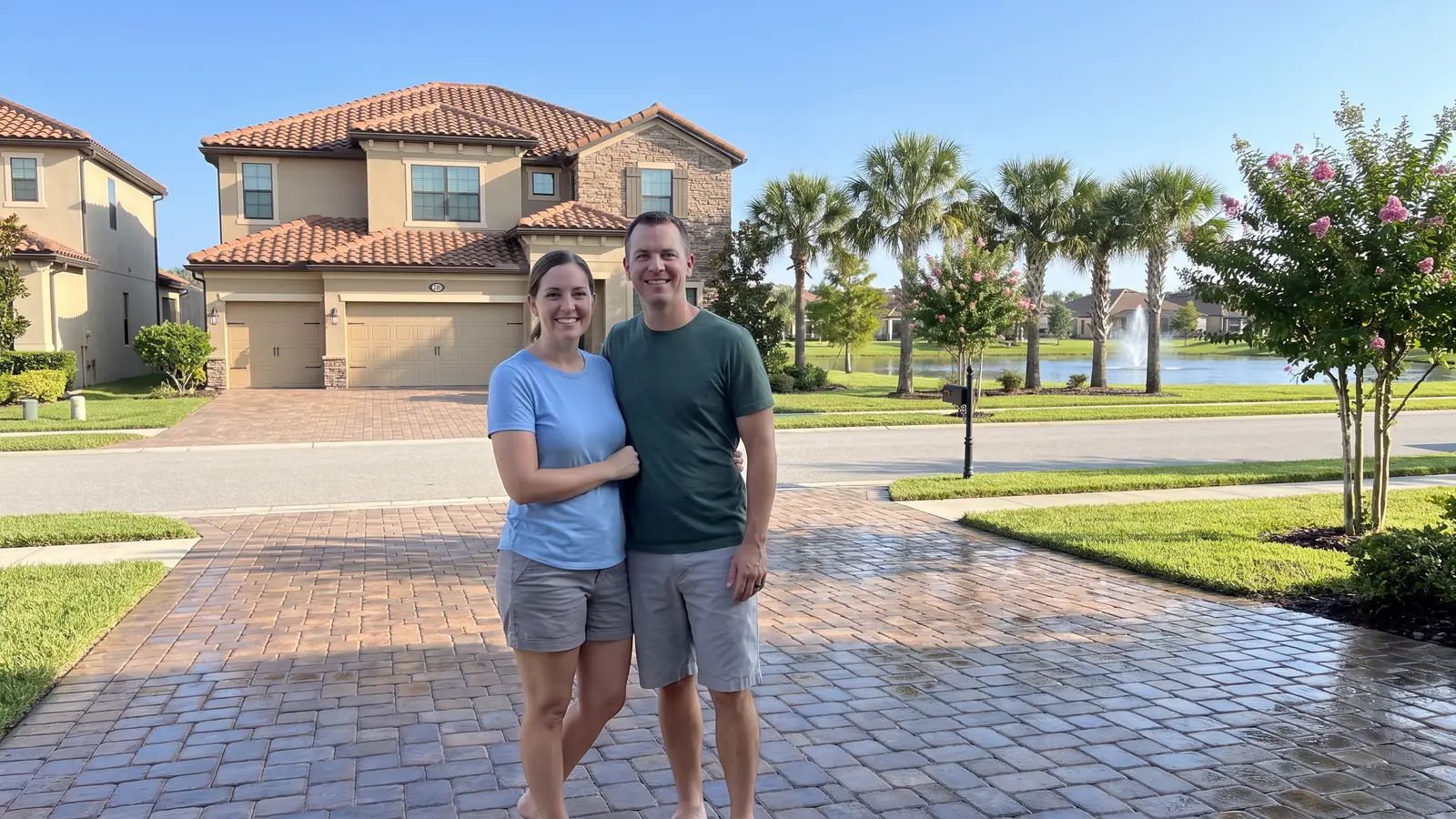
Paver sealing for Melbourne homes
Paver Sealing in Melbourne, FL
Melbourne driveways from Babcock Street to Harbor City Boulevard can be sealed, so call (321) 766-8895 for a free quote.
- Brings out deeper paver color
- Fresh joint sand helps lock pavers in place
- Gives weeds less room to grow
- Makes the surface easier to keep clean
- Free estimate, no obligation
Request a Free Estimate
Free, no obligation.
Fast, careful paver sealing in Melbourne
Paver sealing is available across Melbourne, from Historic Downtown to the neighborhoods along Babcock Street and the lagoon. A local contractor washes, re-sands and seals driveways, patios, walkways and pool decks, and the estimate is free. Choose to ask for a free estimate and a reply arrives within 1 business day, usually much sooner.
Maybe your driveway has gone chalky and gray, with weeds in the seams and a stain by the garage door. A proper wash, fresh sand and a new coat can bring back the color it had when it was laid. Call (321) 766-8895 if you would like to describe the job out loud first.
Why hire a local paver sealing contractor in Melbourne?
Melbourne is a big city with many kinds of lots, which means one plan does not fit every driveway. A local contractor can look at yours and tell you what it needs, so ask for a free estimate.
Estimate at no charge
A contractor looks at your Melbourne pavers and gives you a price first. Nothing is owed unless you decide to go ahead.
Prices you can check
Space Coast companies post $1.85 to $4.00 per square foot to clean, sand and seal. Hold your Melbourne bid up against that range.
Matte or wet look
Pick a quiet matte or a glossier wet look. The wet look shows scuffs sooner, so think about how your drive gets used.
Your call, always
You choose the date and the finish. A Melbourne estimate comes with no obligation to hire anyone.
Get Your Free Estimate in Melbourne
Tell us about your pavers in Melbourne.
Free, no obligation
What paver problems show up most in Melbourne?
Strong sun on open driveways
Melbourne has a humid subtropical climate, and the airport has recorded highs of 102 degrees. A Melbourne company says strong sun can dry sealer out and make it brittle. Open driveways with no tree cover take the full load, which means color fades and the coat thins first there. A chalky, faded look is usually the first sign that a coat is spent. Catching it early keeps the repair simple. A fresh coat also blocks the UV rays that fade color, according to one Melbourne company.
Salt in the air near the coast
University of Florida experts say coastal salt spray matters most within about an eighth of a mile of the coast. A Brevard company adds that Melbourne's salt air and coastal weather speed up paver wear. If your pavers sit close to the water, expect more wear. Pavers farther inland, closer to Interstate 95, face less salt but the same sun, and a contractor can tell which case yours is. Salt can also work its way into brick and concrete and show up later as a white haze. That haze is treated before sealing, not covered by it.
A long run of heavy rain days
The National Weather Service counts about 14 days a year with an inch or more of rain around Melbourne. Sealer needs a dry surface, so a rainy week can erase the days a job needs. A Melbourne company also says heavy rain erodes joint sand. Pavers that lose sand get gaps, and gaps invite weeds. Planning around the weather is part of the work here. The contractor may suggest a slower schedule with a spare dry day built in. That costs little and protects the finish on the first coat.
Pavers from many eras
Melbourne became a village in 1888 and grew in waves, including after Naval Air Station Melbourne opened in 1942, so its streets hold pavers of many ages. Older pavers may have edges that have shifted. Sealer cannot fix a sunken stone and would lock in the dip, so the contractor notes low spots first. Pavers that were never sealed are the easiest to start with, since there is no old coat to identify. Look at the corners and the edges of your pavers, because that is where old coats fail first. Peeling there is a clue about what the whole surface needs.
Stains from sprinklers and the garage
The City of Melbourne supplies reclaimed water to more than 1,000 commercial and single-family properties for irrigation, and says that water is not for washing driveways. If your sprinklers use reclaimed or well water, ask the contractor to check for marks near the heads. University of Florida extension says iron-rich irrigation water leaves orange streaks. Stains like that are treated before sealing, because sealer would trap them. Oil from a car is a common stain on a Melbourne driveway, and it also needs treatment first. Keep a note of where the marks are.
Which parts of Melbourne can get a paver sealing estimate?
All of them can, from Historic Downtown to the golf communities and the lagoon shore. Downtown centers on East New Haven Avenue, where the Henegar Center and a row of shops sit in older buildings, one of them about 120 years old. Older streets nearby can hold pavers of mixed age, so the contractor starts by checking for old coats. Call (321) 766-8895 and give the contractor your neighborhood.
Golf communities are part of the mix too. A Brevard company names Baytree and Balmoral as golf-community homes it serves in Melbourne, and the city owns two golf courses, Crane Creek Reserve and Mallards Landing. Groundworks Pavers and Turf lists HOA review as a common local condition. Check your association's rules about finishes, and then ask for a free estimate.
Melbourne also reaches inland past Interstate 95, which has three exits in the city. Pavers out there are far from the lagoon, so salt matters less and sun and rain matter more. Wherever you live, the contractor needs your street and roughly how old the pavers are. To start, ask for a free estimate.
What does paver sealing cost in Melbourne?
On the Space Coast, posted prices for cleaning, sanding and sealing run $1.85 to $4.00 per square foot. A Melbourne job lands inside that range depending on size, surface condition and how much prep is needed. A Brevard company adds that access and sealer type matter too. Call (321) 766-8895 for a number built from the measurements of your lot.
Pool decks and walkways add up fast, since each is measured and priced along with the driveway. Stripping an old coat, treating efflorescence and refilling sand all add labor. A Central Florida company says larger jobs often cost less per foot than small ones. To see where yours falls, ask for a free estimate.
| Paved area | Typical example | Clean, sand and seal |
|---|---|---|
| 300 sq ft | Small patio or walkway | $555 to $1,200 |
| 600 sq ft | Two car driveway | $1,110 to $2,400 |
| 1,000 sq ft | Large driveway or pool deck | $1,850 to $4,000 |
| 1,500 sq ft | Driveway plus pool deck | $2,775 to $6,000 |
Math based on the $1.85 to $4.00 per square foot that Space Coast paver companies publish. Your contractor sets the actual price after seeing the surface. Repairs, leveling and stripping failed sealer are usually extra.
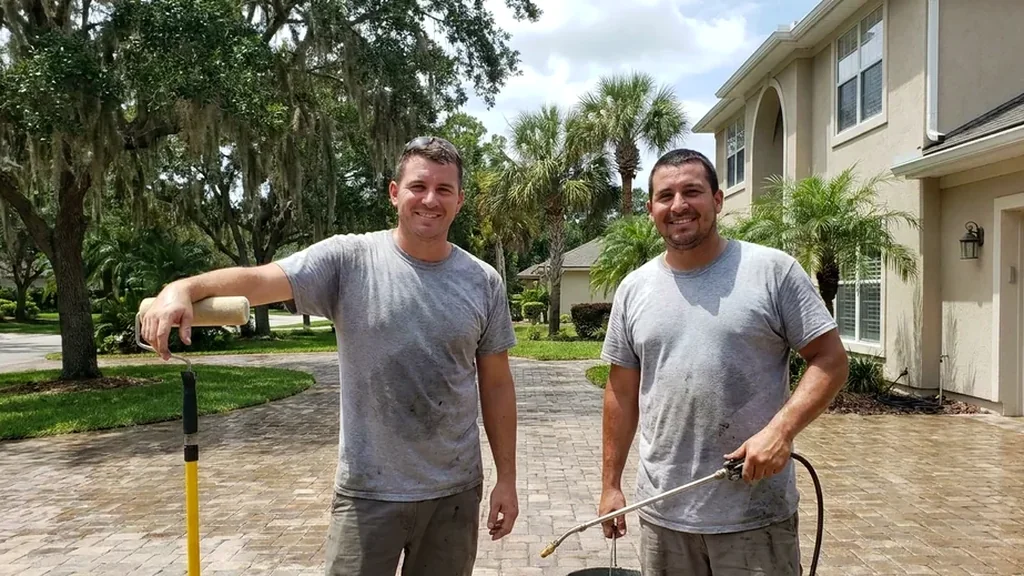
How does a paver sealing job work in Melbourne?
Look the property over
The contractor checks your Melbourne pavers for sun fade, weeds and low spots, and asks about the house. Any sunken stone is noted, since sealer would lock in the dip. Past coats get identified, because water-based sealer cannot go over solvent-based. Tell the contractor about any stain you already know about, such as oil by the garage or rust near a sprinkler head. That short list helps the contractor price the job fairly. You will hear the total before anything is agreed.
Pretreat and clean
A cleaning solution goes on first, and then the surface is rinsed. Stubborn stains and rust get their own treatment. The contractor then treats efflorescence, the white haze that salty water can bring up from brick or concrete. Another rinse follows, so the surface is clean before any sand or sealer touches it. Rinse water is steered clear of flower beds and siding. The contractor will tell you if a mark needs a second pass or will not fully fade. Honest answers now save disappointment later.
Sand the joints
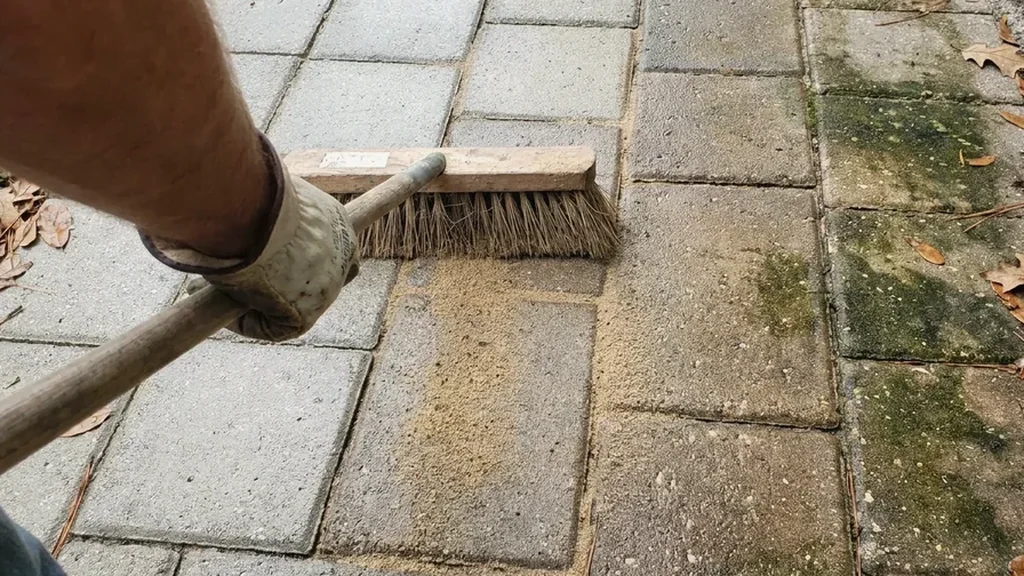
Fresh sand goes into every joint, since sand is what holds the stones together once it is packed in. The surface is swept so loose grains do not sit on top. Melbourne's storms wash sand out faster than people expect, which is why this step matters. Full joints also leave weeds with less room to start. Sand colors vary, so ask about the match before the sand goes down. A close match keeps the joints from looking patchy.
Pick the day
The contractor picks a dry stretch and avoids days when rain is likely, because sealer needs a dry surface. With about 14 days a year of an inch or more of rain across the area, a schedule can shift. Shaded pavers take longer to dry than sunny ones. A short delay is cheaper than a coat that fails. If storms move in midday, the contractor stops and returns when the pavers are dry again. Pausing is routine, and it keeps the coat from failing.
Seal in thin coats
Two coats are common, and each goes on thin so puddles do not form. One Brevard company's steps end with two coats of sealer. You choose the finish first, and the wet look shows scuffs sooner than matte. A Melbourne company says to wait 24 to 48 hours before walking on fresh sealer. Cars may need longer, so ask the contractor. Keep sprinklers off until the sealer is ready, since early morning spray can ruin a coat before it sets.
Complete paver services in Melbourne
A Melbourne job starts with a look and a measurement. Then the order is clean, sand, dry, seal, with no step skipped because each one supports the next. Sealer goes down last, once nothing dirty can be trapped under it. Ask about timing for your lot when you call (321) 766-8895.
Driveways, patios, walkways and pool decks each wear differently. A Brevard company says pool decks face chlorine, salt water and moisture, so they may get a grip additive. Driveways take tires and oil. Name your surfaces when you ask for a free estimate, and the contractor can plan each one.
Many Florida companies choose water-based sealer, and finishes run from matte to gloss. A solvent-based coat already on the surface limits what can follow it. Gloss shows wear faster than matte. Call (321) 766-8895 to compare finishes for your Melbourne house.
Melbourne sits on the lagoon, and about 80 percent of the city drains toward it. Storm water moves fast across paving, so timing matters. A job waits for dry pavers and dry skies, which can shift your date. To lock in a day that suits your calendar, ask for a free estimate.
Questions to ask before you hire
- Do you add a slip-resistant additive when you seal a pool deck?
- Does my HOA need to approve the sealer or the finish before you begin?
- How long do the pavers have to dry after washing before you start sealing?
- What happens if an afternoon storm rolls in the day you planned to seal?
- Which sealer will you use on my pavers, and will it leave a wet look or a natural one?
- How often should I plan to reseal in Florida sun and summer rain?
- Is the quote priced per square foot, and what does that add up to for my driveway?
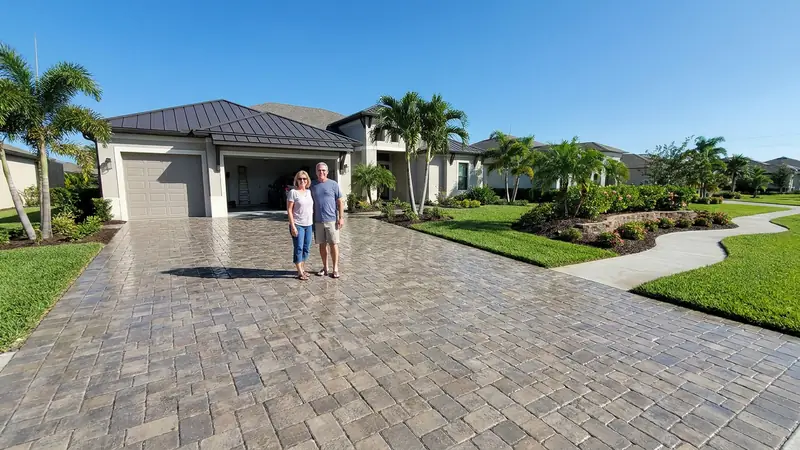
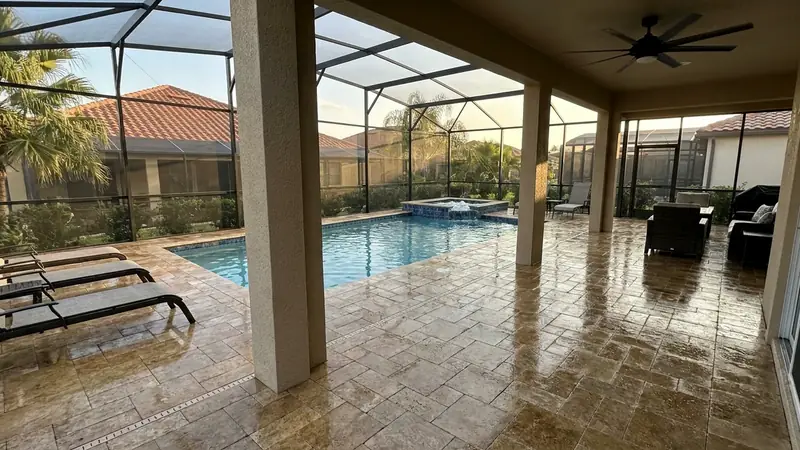
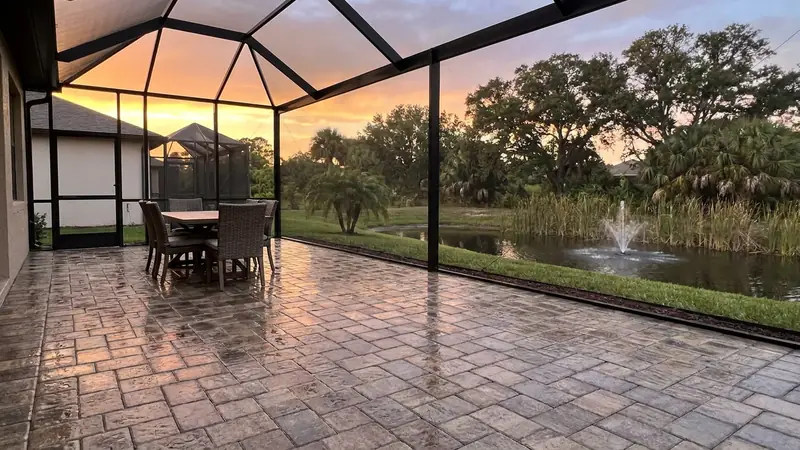
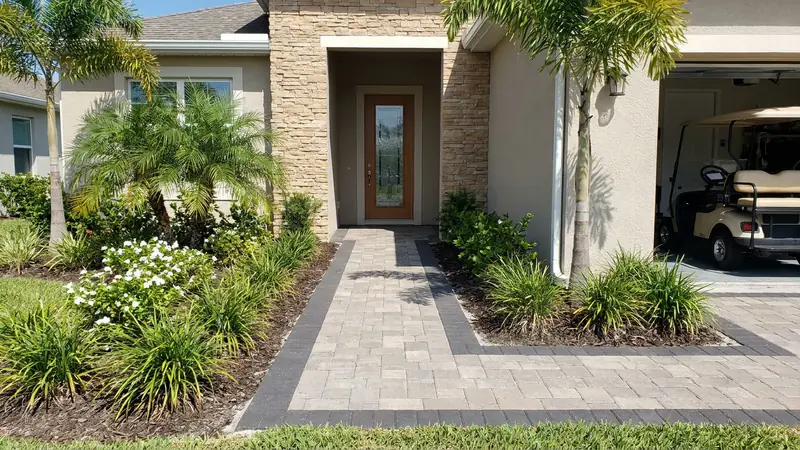
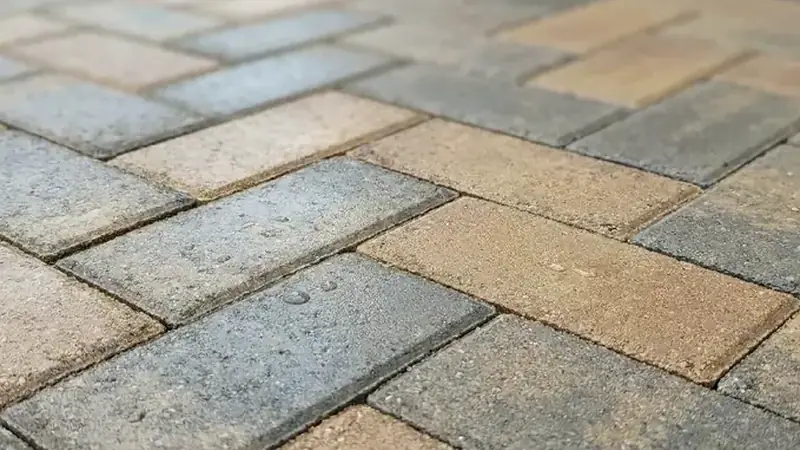
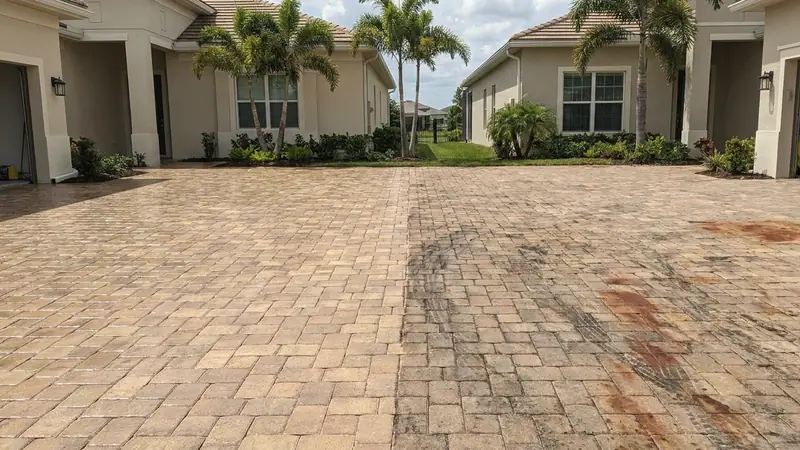
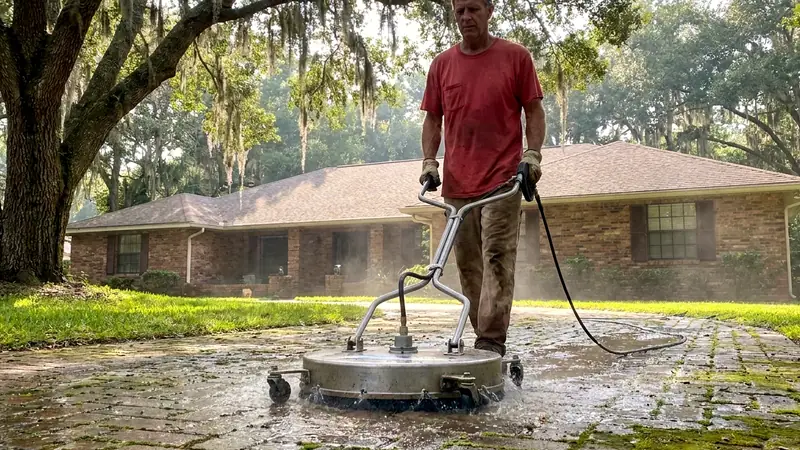
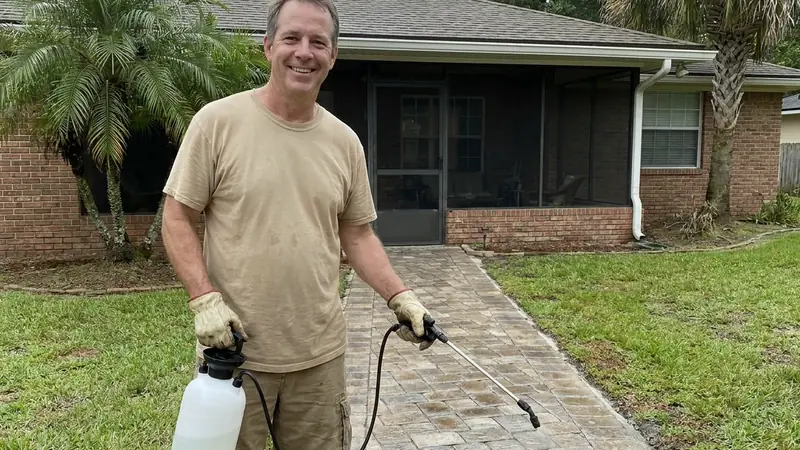
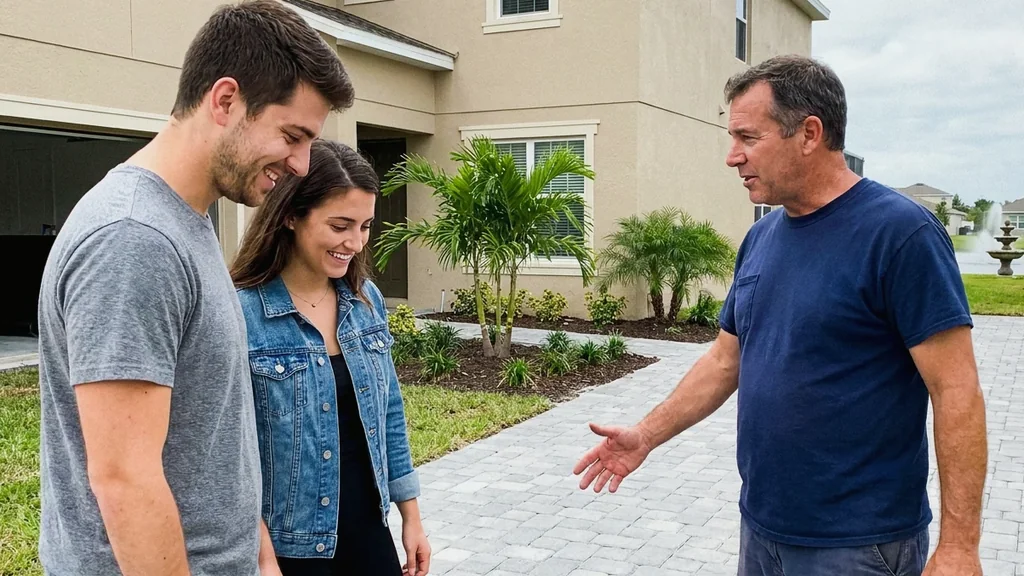
What do sealed pavers look like around Melbourne?
Why local matters in Melbourne
Melbourne is large, with parks, a university, an airport and two causeways, so a contractor who knows the city knows where the work is. That helps with scheduling and with knowing what each area is like. Someone from far away may quote a job without seeing those differences. To reach a contractor who works Melbourne, call (321) 766-8895.
Rain is the other local fact. Melbourne's wet season runs from late May through October, and a contractor who works here builds that into every schedule. You get a realistic date instead of a hopeful one. Ask about it when you ask for a free estimate.
Florida lots may use city water, reclaimed water or a well. The city says reclaimed water is not meant for washing driveways, so ask the contractor what water the wash will use. Knowing which kind your sprinklers draw helps with stains too. Call (321) 766-8895 and mention it.
Where did Melbourne get its name, and does it matter for my pavers?
Not directly, but the story explains why the city looks the way it does. Melbourne was first called Crane Creek, and it was renamed for its first postmaster, Cornthwaite John Hector. It became a village on December 22, 1888, and a fire in 1919 destroyed most of the original downtown along Front Street. If you live in an older part, ask for a free estimate.
Naval Air Station Melbourne opened in late 1942 and closed in 1946, and its land now makes up most of Melbourne Orlando International Airport. Florida Tech began in 1958 as Brevard Engineering College. In 1969 Melbourne merged with Eau Gallie, and the Ice Plant of 1927 is among its National Register sites. To talk about the street you live on, call (321) 766-8895.
Frequently Asked Questions
What is the average cost to seal pavers in Melbourne?
Companies on the Space Coast commonly post $1.85 to $4.00 per square foot for cleaning, sanding and sealing. Size, stains and old sealer move a Melbourne job inside that range. Ask for the square footage and the number of coats in writing so you can compare quotes. A written quote also shows whether sanding the joints is included. Where your pavers sit matters too. Open driveways and pool decks usually move sooner than a covered patio.
What should sealing outdoor pavers cost in Melbourne?
Expect $1.85 to $4.00 per square foot for cleaning, sanding and sealing, as Brevard companies commonly publish. Stains, old sealer and missing joint sand push a job up. Treating efflorescence adds labor too. A written quote shows what is included. Larger jobs often cost less per foot than small ones, and a small stained patio can cost more per foot than a long plain drive.
Is there a downside to sealing pavers in Melbourne?
The main downsides are upkeep and timing. Sealer wears and needs a new coat, and a high-gloss finish wears faster than matte. Sealing also depends on a dry surface, so rainy weeks can delay a job. Some owners see that as a fair trade for color that lasts and joints that stay full. The contractor can explain what to expect on your surface.
How often should I seal pavers in Melbourne?
Most coats last somewhere between two and five years, based on what companies quote. A Melbourne company advises every two to three years, and says busy driveways and pool decks may need a coat every one to two years. Fading color or water that stops beading is the signal. If you are unsure where you stand, look for fading, weeds in the joints or water that soaks in instead of beading. Those are the signals.
Which sealer is right for pavers in Melbourne?
Many Florida companies use water-based sealer because it lets moisture escape. If a solvent-based coat is already on the surface, water-based sealer cannot go over it. Ask for the product name, the finish and the number of coats before you agree. Finish matters too, since gloss shows traffic wear sooner and matte stays quieter. Ask to see both before you choose.
Can pavers in Melbourne be sealed during the wet season?
Yes, provided the surface has been cleaned and has fully dried. The wet season runs late May through October, and the contractor waits for a dry gap. Shaded pavers can stay damp longer, so ask how the contractor will check. A damp morning can leave sealer unsafe to apply even on a sunny afternoon. Ask how the contractor will judge dryness on your lot.
Does salt air near the coast change sealing in Melbourne?
It can raise the wear on pavers close to the water. University of Florida experts say salt spray matters most within about an eighth of a mile of the coast. Pavers farther inland see less salt, and the contractor can tell you which case fits your street. Sealing does not remove salt from the air. It gives the surface a barrier, and the contractor can suggest a schedule that fits your location.
How long before I can drive on freshly sealed pavers in Melbourne?
Wait for the contractor's word, because it depends on the sealer and the weather. One Brevard company says to wait 24 to 48 hours before walking on fresh sealer. A Central Florida company says to keep cars off a sealed driveway for at least 48 hours. A pool deck or a heavy vehicle may need extra time before regular use. Ask for the exact wait on your product.
Ready for a Free Estimate in Melbourne?
Call (321) 766-8895 and tell us about your pavers.
Free, no obligation